
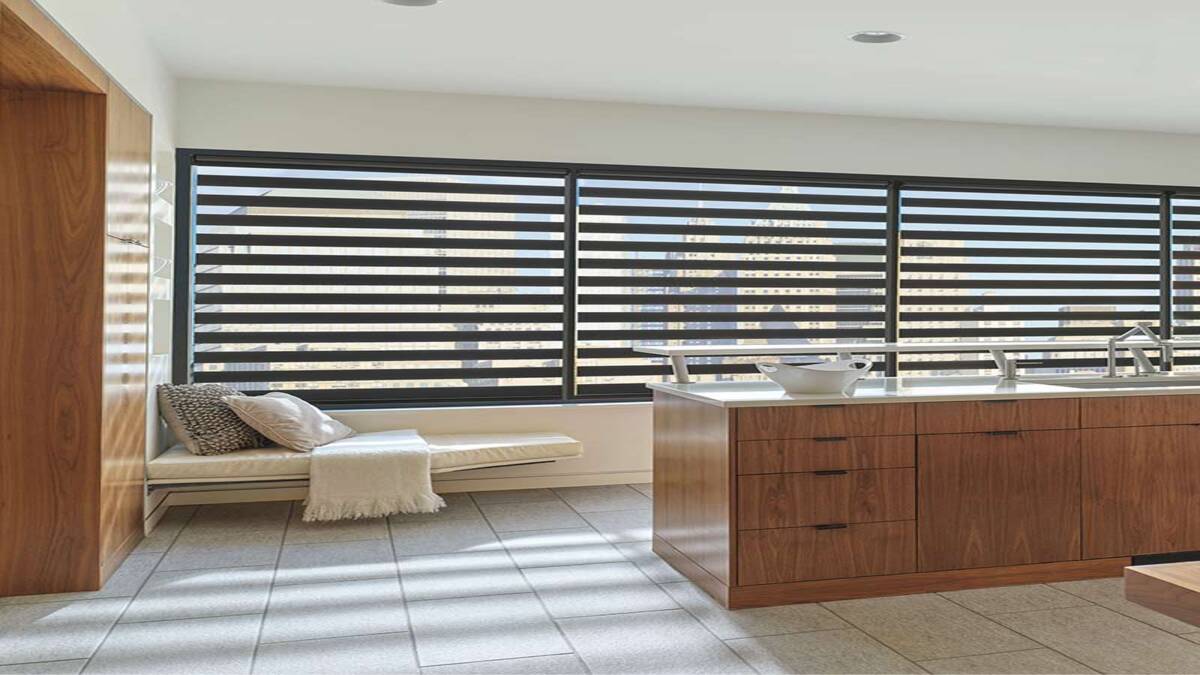
Quotes for Hunter Douglas blinds land between $300 and $2,300 per window, and that spread is what catches homeowners off guard. Our team has measured and installed window treatments across Kansas City for 30 years, and price is almost always the first thing customers bring up in the showroom.
The number makes more sense once you see how these shades are built, who builds them, and what you get after installation day.
The Short Answer: What You are Paying For
Every shade is made for one specific opening. Nothing gets pulled off a shelf and trimmed down to fit.
The price also covers work that happens well outside the factory:
- Professional measuring in your home
- Custom manufacturing to your exact measurements
- Patented fabrics and lift systems
- Professional installation
- A lifetime limited warranty backed by local service
You are buying a finished project, not a product in a box.
Key Takeaway: Compare quotes by what they include. A lower number that leaves out measuring, installation, and service is not actually a lower price.
What Hunter Douglas Blinds Cost in 2026
The $300 to $2,300 spread exists because the product lines are built very differently from one another.
Price by Product Line
- Applause honeycomb shades: entry-level
- Duette honeycomb and Designer Roller: mid-range
- Sonnette cellular roller shades: mid-range
- Silhouette and Pirouette: upper tier
- Alustra Collection and Luminette: top tier
- PowerView motorization: adds a few hundred dollars per shade
Typical Kansas City Project Ranges
- Four windows, manual lift, standard fabrics: roughly $1,600 to $3,200
- Eight windows, mix of manual and motorized: roughly $4,000 to $8,500
- Whole home with full motorization: $8,000 and up
Why Two Quotes for the Same Window Differ
Fabric grade, opacity, lift system, mount type, and headrail style all move the number. Two shades that look similar from across the room can be $800 apart in price.
Ask for a per-window breakdown. Any dealer worth hiring will give you one without hesitation.
Ready for a real number instead of a range? Contact One Stop Decorating for a free in-home consultation.
The Real Cost Drivers
Custom Fabrication for One Opening
Standard blinds are produced by the thousand in fixed sizes. Custom shades are cut, sewn, and assembled for your window alone, which removes every economy of scale a mass producer relies on.
Odd shapes, arches, and oversized spans add material waste and labor on top of that.
Patented Fabrics and Lift Systems
Duette honeycomb cells trap air at the glass and slow heat transfer. Silhouette vanes float between sheer facings to soften daylight without blocking the view.
Duette was the first cellular shade on the market when it launched in 1985, and Hunter Douglas develops and manufactures the fabrics for both lines. Competitors sell similar-looking products, but the cell construction and tested insulation values are not the same.
Lift systems carry real cost as well. LiteRise, UltraGlide, and PowerView are engineered hardware, and the child safety standards adopted industry-wide in 2024 replaced simple cords with mechanisms that cost more to build.
Measuring, Installation, and Service
A mismeasured custom shade cannot be returned or recut. Our team measures, orders, installs, and services the product, and that labor sits inside the quote instead of surfacing later as a surprise.
Pro Tip: Ask who performs the installation. Companies that subcontract have less control over the finished result and slower service when something needs adjusting.
When Hunter Douglas Window Treatments are Worth Every Dollar
Rooms You Actually Live In
Shades in family rooms, kitchens, and primary bedrooms get opened and closed every day for decades. Thin fabric and cheap lift hardware show their age fast in those rooms.
Windows You Cannot Reach
High windows, stairwell openings, angled glass, and skylights are the strongest case for motorization. A shade you cannot comfortably operate simply stops getting used.
Rooms That Lose Energy
Kansas City swings from humid summers to hard winters, and west-facing glass punishes a home in July. Insulating honeycomb shades cut that heat gain in summer and hold warmth in through winter.
Key Takeaway: Spend on the windows you use daily, cannot reach easily, or that are costing you money in utilities. That is where the price difference earns itself back.
When It Is Not Worth It
Rentals and Short-Term Flips
Tenants and buyers rarely pay a premium for window treatments. A quality mid-tier product does the job in these properties.
Utility and Low-Traffic Spaces
Basement storage rooms, laundry areas, and guest rooms used twice a year do not need a designer sheer.
Pro Tip: Most homes should not use the same product on every window. Mixing tiers room by room is the single easiest way to control a whole-home budget, and a good consultant will point you to a lower tier where it makes sense.
How to Lower Your Quote Without Switching Brands
- Choose Applause over Duette, or Sonnette over Silhouette, to stay with the brand at a lower tier
- Use manual cordless operation on any window you can reach comfortably
- Motorize only the windows that are genuinely hard to access
- Phase the project by room instead of doing the whole house at once
- Select standard fabrics rather than the Alustra Collection
- Time your order with seasonal rebates and our current promotions
- Ask about financing to spread the cost out
Key Takeaway: The biggest savings come from the lift system and the fabric tier, not from cutting windows out of the project.
What Is Included When You Buy Hunter Douglas Blinds From Us
- Free in-home consultation and professional measuring
- Four Kansas City area showrooms where you can see and operate the products
- Our own installers, not subcontractors
- An in-house service department for adjustments and repairs
- 30 years in business and more than 1,500 reviews averaging 4.9 stars
Common Questions
Can You Negotiate the Price?
Hunter Douglas sets the pricing structure dealers work within, so there is little room to haggle. Rebates and dealer promotions do run throughout the year.
Why Can’t I Buy Them at a Big-Box Store?
They are sold only through certified dealers who measure and install the product.
How Long Do They Last?
Fifteen to twenty years is common with normal use. The Lifetime Limited Warranty covers defects in materials and workmanship for as long as you own the product, with shorter terms on some parts, including five years on motors.
Get an Honest Assessment of Your Windows
The right answer is rarely the same product on every window in the house. Our consultants will tell you which openings justify the investment and which ones do not, then give you a written per-window breakdown so nothing is left to guesswork.
Schedule your free in-home consultation with One Stop Decorating and find out what Hunter Douglas blinds would actually cost for your home.