
Cords that tangle, wands that need a firm grip and shades tucked behind the sofa make a simple daily task harder every year. The right window treatments for aging in place remove that strain and help lower the risk of a fall.
After more than 30 years of fitting Kansas City homes with Hunter Douglas products, we know which options make daily life easier and which ones cause problems later. This guide covers both, room by room.
Why Windows Get Harder to Manage with Age
Most window coverings were designed for someone who can grip, reach and lean without a second thought. Those motions get harder over time, and windows are one of the few things in a home you operate every day.
Grip and Reach
Arthritis makes cords, small wands and heavy drapery painful to use. Reaching over a bed, sofa or kitchen counter shifts your weight forward and off balance. Step stools for high windows add even more risk, and falls are the leading cause of injury for adults 65 and older, according to the CDC.
Vision and Glare
Aging eyes need more light to see clearly, yet they handle glare worse. Bright patches of sun on the floor can hide the edge of a rug or a step. The Health in Aging Foundation even recommends sheer window coverings to cut glare for older adults with vision changes.
Sleep and Temperature
Sleep patterns shift with age, and many people become more sensitive to heat and cold. Kansas City summers turn west-facing rooms hot by late afternoon, and winter drafts come straight through the glass.
Key Takeaway: A safe aging-in-place setup removes three things: cords, reaching, and harsh glare.
The Best Window Treatments for Aging in Place
Motorized Shades
Motorization is the most complete answer. Hunter Douglas PowerView® shades open and close with a handheld remote, a phone app, a wall switch or a voice assistant like Alexa or Google Home. Schedules can raise bedroom shades at sunrise and lower them at dusk with no one touching them.
Some existing Hunter Douglas shades can be upgraded to motorization, so you may not need to replace everything. We’ll check yours during your consultation. If budget is a concern, compare Alta motorization and PowerView.
Cordless Cellular Shades
For manual operation, Duette® honeycomb shades with LiteRise® lift with a light push on the bottom rail. There are no cords and no wand. The honeycomb cells also trap air, which cuts winter drafts and summer heat.
Add a top-down/bottom-up option to lower the shade from the top for daylight while keeping privacy at eye level.
Sheer Shadings for Glare
Silhouette® and Pirouette® shadings use soft fabric vanes that tilt to filter sunlight into an even glow. They are our first pick for living rooms where glare on the TV or floor is a problem. Our guide to reducing glare goes deeper.
Plantation Shutters
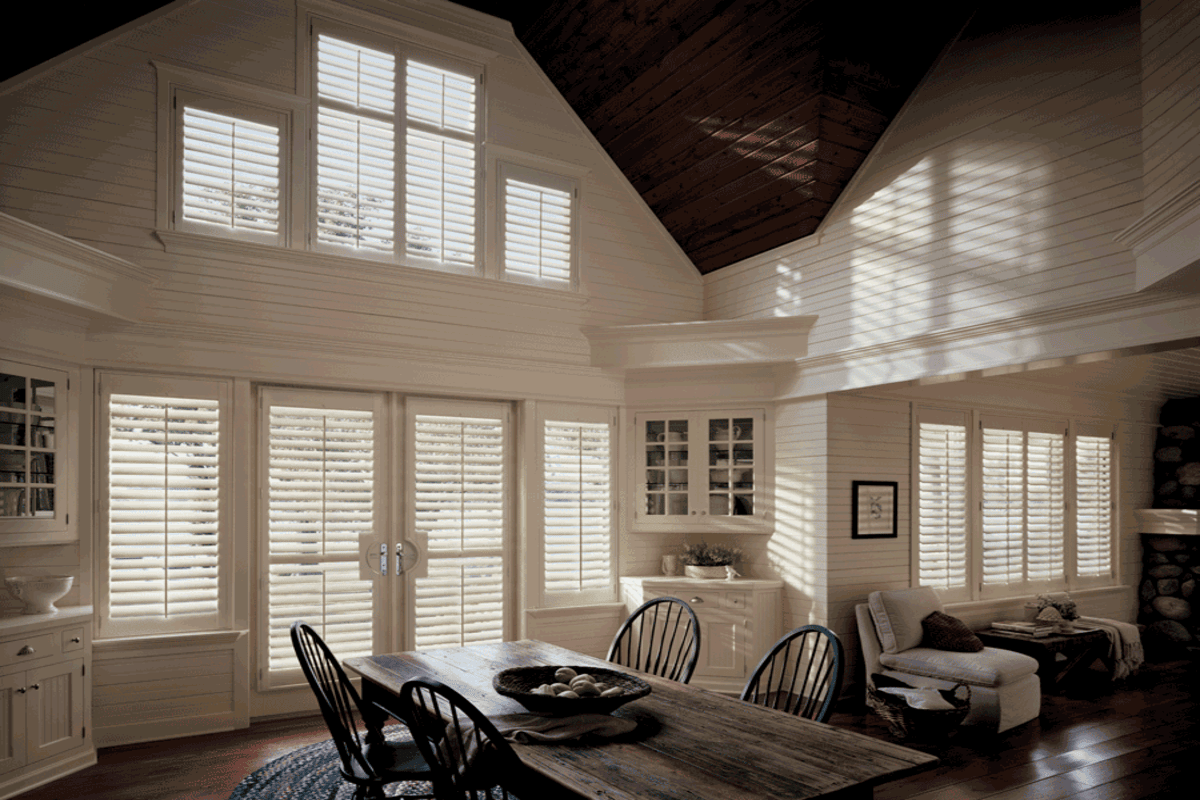
Shutters are durable, easy to wipe clean and simple to tilt. Swinging a large panel open takes more strength, though. For homeowners planning to stay put long term, smaller panels with a hidden tilt rod are the better choice.
What to Avoid
- Corded blinds and loop chains. They are a tangle and trip hazard. Read what the law now says about corded blinds.
- Heavy lined drapery on hand-pulled rods. It is hard on shoulders and wrists.
- Manual controls behind furniture. These force you to lean and balance.
Pro Tip: Keep a remote or wall switch within easy reach of the bed or a favorite chair, and set schedules from day one. Shades that run on their own are the easiest shades to use.
Room-by-Room Recommendations
- Bedroom: Choose a dual shade with light filtering and room darkening on one headrail, controlled by remote from the bed.
- Living room: Sheer shadings or light-filtering rollers control glare. Keep controls away from the back of the sofa. See more living room ideas.
- Kitchen: Motorize the window over the sink. It is often the hardest window in the house to reach.
- Bathroom: A top-down/bottom-up cellular shade gives privacy without reaching across a tub.
- High or large windows: Go motorized only. No ladders and no step stools. These tips for hard-to-reach windows help with planning.
Planning Ahead for a Parent
Adult children often start this conversation on behalf of a mom or dad who wants to stay home. Window treatments for seniors work best when the family plans them together.
Which Rooms to Do First
Start where the risk is highest:
- The bedroom, where shades get used morning and night
- The kitchen, where the reach over the sink happens daily
- The living room, where glare affects reading, TV and walking paths
Setup That Makes Window Treatments for Aging in Place Easy to Use
Your parent should never need to learn an app. Set schedules once so the shades run on their own, and keep one simple remote in each room. If you live out of town, ask about joining the planning conversation so you can weigh in on choices.
Key Takeaway: Phasing the project room by room keeps costs manageable and puts safety first where it matters most.
What Do These Upgrades Cost?
Price depends on the product, the window sizes and how many windows you motorize. Cordless manual shades cost less up front, and motorization adds to the price of each window. Many families start with the bedroom and kitchen, then add rooms over time. For real numbers, see our breakdown of how much blinds cost per window.
Need help choosing safer window coverings for your home or a parent’s? Contact One Stop Decorating for a free in-home consultation.
Frequently Asked Questions
Are motorized shades worth it for seniors?
For most aging homeowners, yes. Motorized shades remove almost all of the reaching, pulling and leaning, and schedules mean the shades work even when no one remembers to adjust them.
Do motorized shades work during a power outage?
Battery-powered motors do not depend on your home’s electricity, so the shades themselves keep working. Features that rely on Wi-Fi, like app control and voice commands, may pause until power returns. We’ll help you choose the right power option for each window.
Are blackout shades good for older adults?
They are useful in bedrooms for better sleep. In living areas, light-filtering fabrics are safer because full darkness creates high-contrast shadows that make it harder to see the floor.
Pro Tip: Have a dual shade installed in the bedroom. It gives you blackout at night and soft daylight in the morning from one headrail.
Make Every Window Easier to Live With
Safer windows do not require a full remodel. Our designers come to your home, measure every window and plan control placement around how you move through each room. Our team handles everything from the first measurement to the final installation.
We serve the Kansas City area, including Overland Park, Shawnee, Lee’s Summit and Kansas City North. Schedule your free in-home consultation or call the showroom nearest you to find the best window treatments for aging in place.